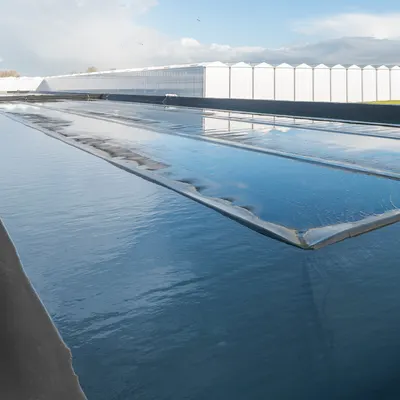
High temperatures and longer periods without rainfall are making drought increasingly noticeable. During the summer, water availability can come under pressure, while this is precisely when plants need plenty of it. At Nieuwkoop Europe, we therefore collect rainwater throughout the year, store it and reuse it within our nursery. This means we do not need to rely on external water sources and can continue to meet our plants' water requirements during dry periods, while using every litre of water as efficiently as possible.
Rainwater as our main water source
Rainwater is the ideal water source: it is naturally of high quality and freely available. Over the course of a year, there is generally enough rainfall to provide the plants in our nursery with water. However, rainfall is not always evenly distributed throughout the year.
Particularly during hot and dry periods, the need for water can increase while rainfall decreases. During wetter periods, on the other hand, there is often a surplus. By collecting rainwater and storing it for longer periods, we can bridge these differences and make optimum use of the available water.
11,000 m³ of water storage and an underground buffer
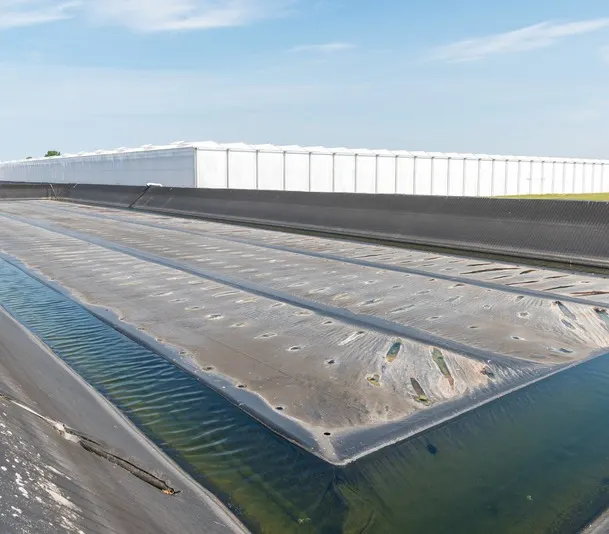
Behind the Nieuwkoop Europe nursery are two large water reservoirs. Together, these reservoirs can store 11,000 cubic metres of rainwater. When more rain falls during wet periods than we can store directly in the reservoirs, the excess water is transported through a pipe to an underground storage facility at a depth of approximately 40 metres. There, the water is stored between the grains of sand.
During dry periods, this water can be pumped back up to replenish the supply in our reservoirs. This allows us to save water that is available during wetter months for times when it is needed more. Especially during prolonged periods of heat and drought, this buffer helps us use the available water as efficiently as possible.
A closed water system
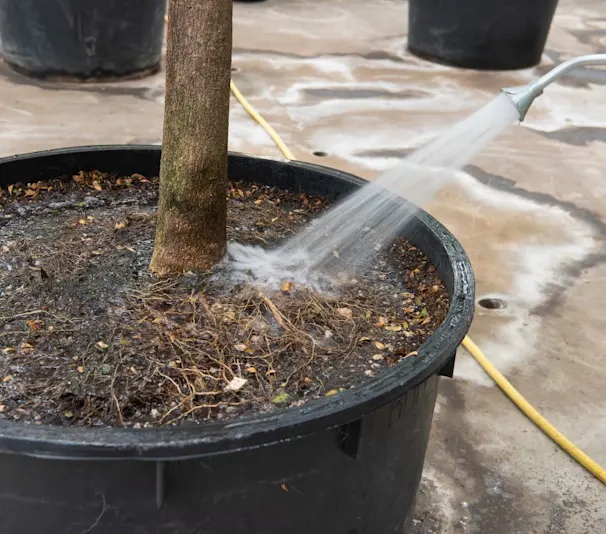
Rainwater is pumped from the reservoirs and used to water the plants in our nursery. We use a closed water system, which means that irrigation water that is not absorbed by the plants is not lost, but collected and reused.
This not only saves water, but also allows us to use nutrients efficiently. Not all nutrients given to plants are absorbed immediately. Some remain in the irrigation water and return to us through the closed system. We then measure how many nutrients are still present in the water. Based on this, we add extra nutrients or clean water until the desired nutrient level (EC) is reached again. The water can then be reused.
In this way, we minimise waste of both water and nutrients and make maximum use of what is already available.
Sustainable water use for the long term
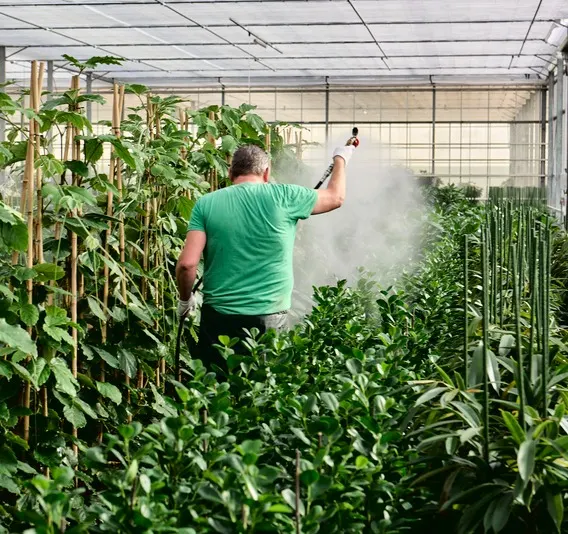
Dry and hot periods demonstrate how important it is to use water responsibly. By collecting rainwater when it is available, storing it for longer periods and continuously reusing it within our nursery, we minimise our dependence on other water sources as much as possible. Our closed water system is therefore an important part of our sustainable operations and helps us use an increasingly valuable resource carefully, even during prolonged dry periods: water.