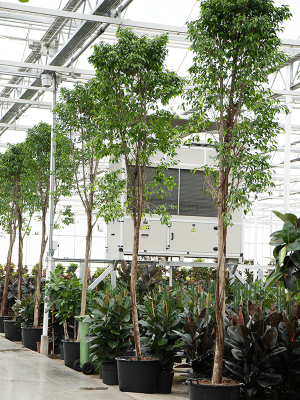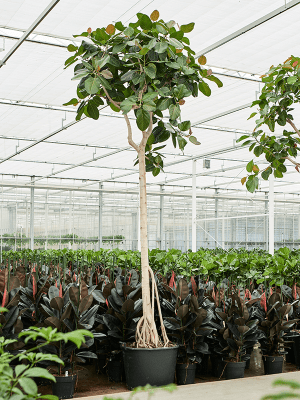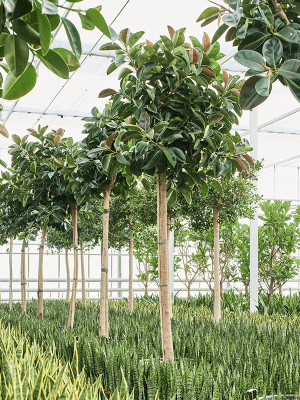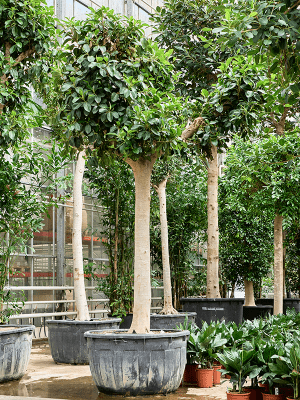
Ficus rubiginosa 'Australis'
Stem
4FIAURS87

Origin
Pistacia lentiscus, also known as the mastic tree, has its origin in the Mediterranean region, including the Canary Islands and North Africa. It is native and primarily grows in dry, rocky environments on limestone soils. The tree has a history dating back to ancient times, where it was used for medicinal purposes and as a source of mastic resin.
Characteristics
Pistacia lentiscus is an evergreen shrub or small tree that can reach a height of up to 5 metres. The leaves are shiny, leathery and composed of an odd number of leaflets. The plant produces small, sterility flowering flowers, followed by roundish fruits that turn red and then black on ripening. The mastic tree is hermaphroditic and can have both male and female flowers on the same plant.
Care
Pistacia lentiscus prefers full sun and well-draining soil. It is well adapted to drought and requires little water, particularly during summer. Annual pruning is recommended to maintain the shape of the plant and promote dense growth. The plant is generally free from serious diseases and pests, contributing to the ease of its maintenance. It is important to note that, although the mastic tree can survive in colder temperatures, it thrives best in warm, Mediterranean conditions.
| Phone NL | +31 885 014 000 |
|---|---|
| Phone NGC | +31 885 014 014 |
| Phone FR | +33 (0)130 760 344 |