Origin
Butia capitata is a palm species native to South America, mainly Brazil, Uruguay, and north-eastern Argentina. The species naturally occurs in open savannah and grassland areas. In the wild, this palm grows on poor, well-draining soils.
Characteristics
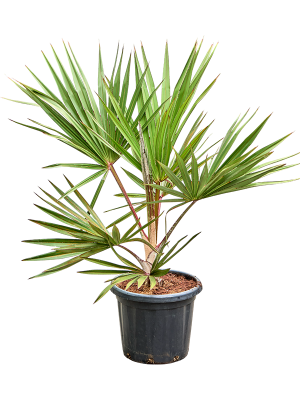
Butia capitata is a slow-growing palm with a thick, grey-brown trunk that can reach up to six metres in height. The crown consists of strikingly arching, blue-green leaves that can be up to three metres long. Clusters of yellow to orange fruits appear on the plant. The leaf margins are slightly spiny and the leaf structure is feather-shaped. The trunk is often covered with remnants of old leaf bases.
Care
Butia capitata grows best in a sunny position. The plant tolerates dry periods but prefers a well-draining, nutritious soil. Regular watering during the growing season encourages development. This palm is fairly resistant to cold temperatures down to around -10 degrees Celsius. Pruning dead leaves helps to maintain a tidy appearance.