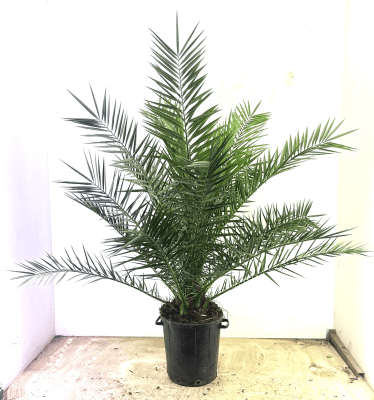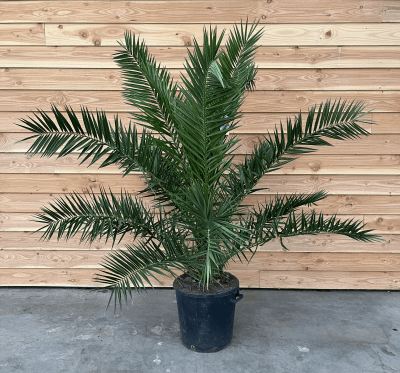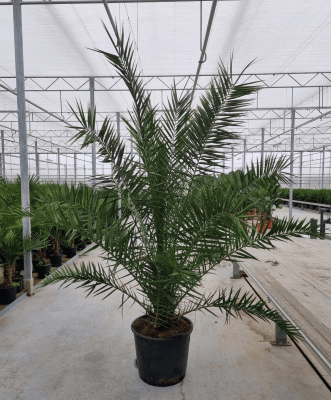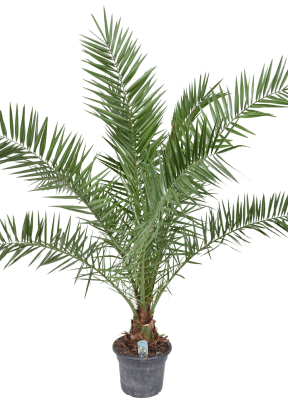
Phoenix canariensis
F00004372

Origin
The Trithrinax brasiliensis, also known as the Brazilian needle palm, has its origin in South America, specifically in Brazil, Uruguay, and Northern Argentina. This palm prefers primarily sandy or rocky soils and can survive both in arid and moist climates. It is often found in areas ranging from high savannahs to coastal beaches.
Characteristics
The Trithrinax brasiliensis is a very sturdy, slow-growing palm, which can eventually reach heights between six and eight meters. It has long, rigid, grey-green leaves that can vary in lengths from two to three meters. The trunk of this palm is covered with a unique pattern of old leaf bases, giving it a particularly striking appearance. It produces small, round, yellow fruits, which are very popular with the local fauna.
Care
The Trithrinax brasiliensis requires little maintenance and is resistant to both drought and frost. This palm prefers full sun and is resistant to salt winds, making it ideal for planting in coastal areas. While the plant can survive in diverse soils, it prefers well-draining soils to prevent root rot. Overwatering should be avoided, particularly during the winter season, as the plant uses little water during this period.
| Phone NL | +31 885 014 000 |
|---|---|
| Phone NGC | +31 885 014 014 |
| Phone FR | +33 (0)130 760 344 |