Origin
Ammophila arenaria is native to the coastal regions of Europe and North Africa. This plant mainly grows on sandy dune soils and has adapted to dry, windy conditions. Its root system plays an important role in stabilising sand dunes. The species has been planted in various areas to promote dune formation.
Characteristics
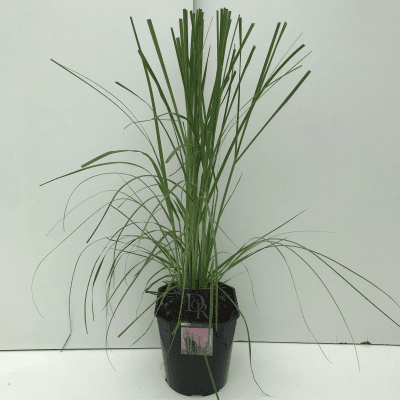
Ammophila arenaria is a robust, perennial grass-like plant with upright, rigid stems. The grass-like leaves are narrow, grey-green in colour, and can grow up to half a metre long. The plant forms dense tufts and has a deep, branched root system that binds sand. The inflorescence consists of compact, spike-like panicles that appear from June to August. Ammophila arenaria can reach a height of 60 to 120 centimetres.
Care
Ammophila arenaria grows best in sandy, well-draining soils. The plant tolerates dry conditions and requires little in the way of nutrients. Waterlogged soil is poorly tolerated. Regular pruning is not necessary, as the plant renews itself with new shoots. Thanks to its strong root system, the plant can persist for a long time without intensive care.