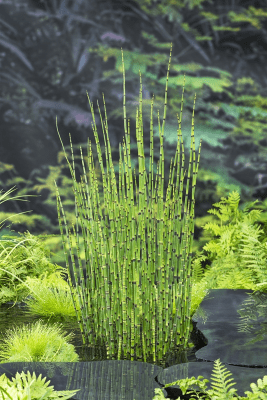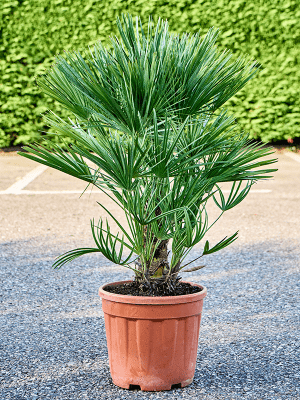
Pittosporum tobira 'Nana'
Bush
5PITNBU22

Origin
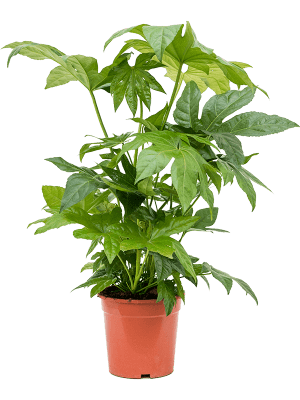
The Fatsia japonica, also known as the paperplant, has its roots in East Asia and is primarily native to Japan, South Korea, and Taiwan. In these regions, it primarily grows in forests on mountainsides and in coastal areas. The plant has been introduced and further spread in other parts of the world due to its aesthetic appeal and adaptability to different climates and soil types.
Characteristics
The Fatsia japonica is an evergreen shrub or small tree that can grow up to 5 metres high. The most notable feature is the large, hand-shaped leaves, which are about 20 centimetres long and have 7 to 9 lobes. The plant blooms from October to November with small, white flowers that grow in clusters. This is followed by the development of small, black, inedible fruits.
Care
For optimal growth, the Fatsia japonica needs a location with partial shade or shade and well-draining, fertile soil. Although it is drought resistant, the plant thrives best with regular watering. It is recommended to fertilise the plant annually in the spring to promote colour and growth. Pruning is not necessary but can be done to manage the size or to remove dead or damaged branches.